
An overview of the Australian Carbon Credit Units (ACCU) market in Australia
An Australian Carbon Credit Unit (ACCU) is issued by the Clean Energy Regulator (Regulator) and represents one tonne of carbon dioxide equivalent (tCO2-e), either removed from the atmosphere (“sequestered”) or not emitted (“reduced” or “avoided”) as a result of the activity undertaken by a carbon project. ACCUs are tradeable financial products that can be sold to businesses wishing to offset their emissions, or who have obligations to offset them under State or Commonwealth laws. There are nearly 3,000 ACCU projects registered across Australia.
ACCU projects by method across Australia
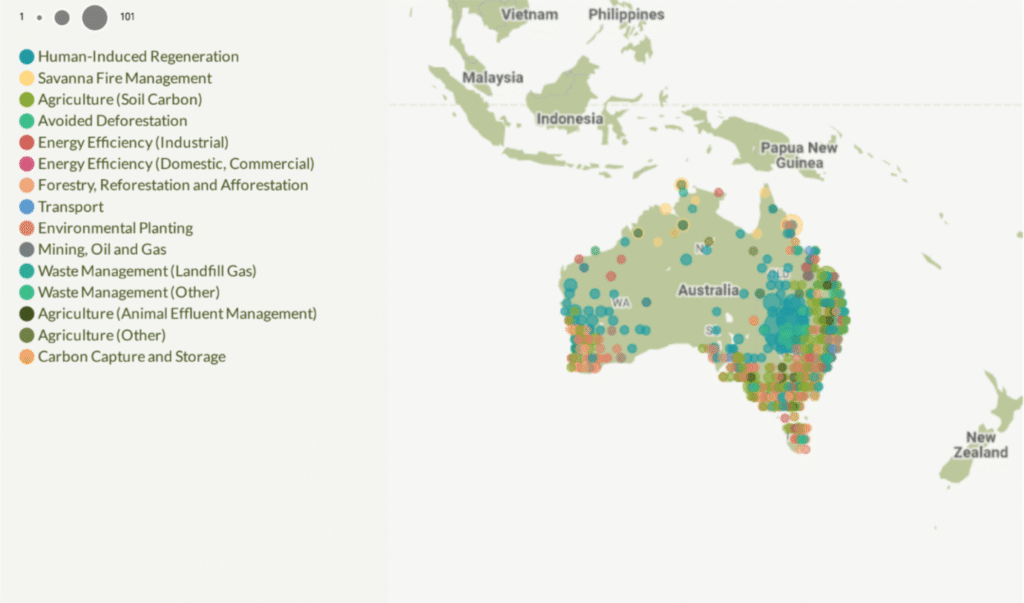
Source: Viridios.ai
How ACCUs are issued
ACCUs are issued by the regulator to eligible, registered projects that are run in accordance with the relevant rules and are recorded in the Australian National Registry of Emissions Units.
The issuance of ACCUs is governed by the Carbon Credits (Carbon Farming Initiative) Act 2011, and the Carbon Credits (Carbon Farming Initiative) Rule 2015 (CFI Rule 2015).
After a project has carried out the activities to deliver emissions reductions in accordance with its methodology, the proponent submits the relevant information to the regulator for assessment. Following approval by the regulator, ACCUs are issued and can be surrendered or sold in the market.
Lifecycle of an ACCU
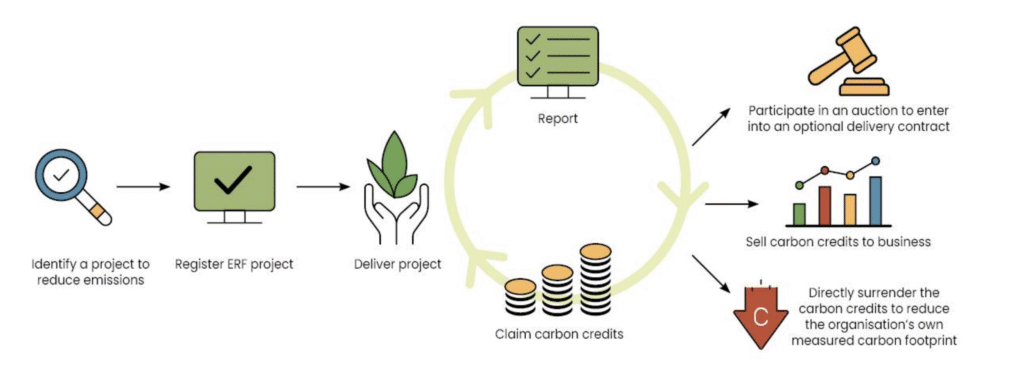
Source: Clean Energy Regulator
What are ACCU methods
ACCU methods explain how to carry out a project and measure the resulting reductions in greenhouse gas emissions. They set out what you must do to run project-specific activities, calculate greenhouse gas abatement and report to the Clean Energy Regulator. The methods:
- May require calculation of a CO2-e baseline.
- Require calculation of reduced, avoided or removed CO2-e emissions.
- Set out carbon measurement or modelling techniques.
- Detail project-specific activities to be undertaken in order to achieve reduction, avoidance or removal of CO2e.
- Have permanence obligations for sequestration projects.
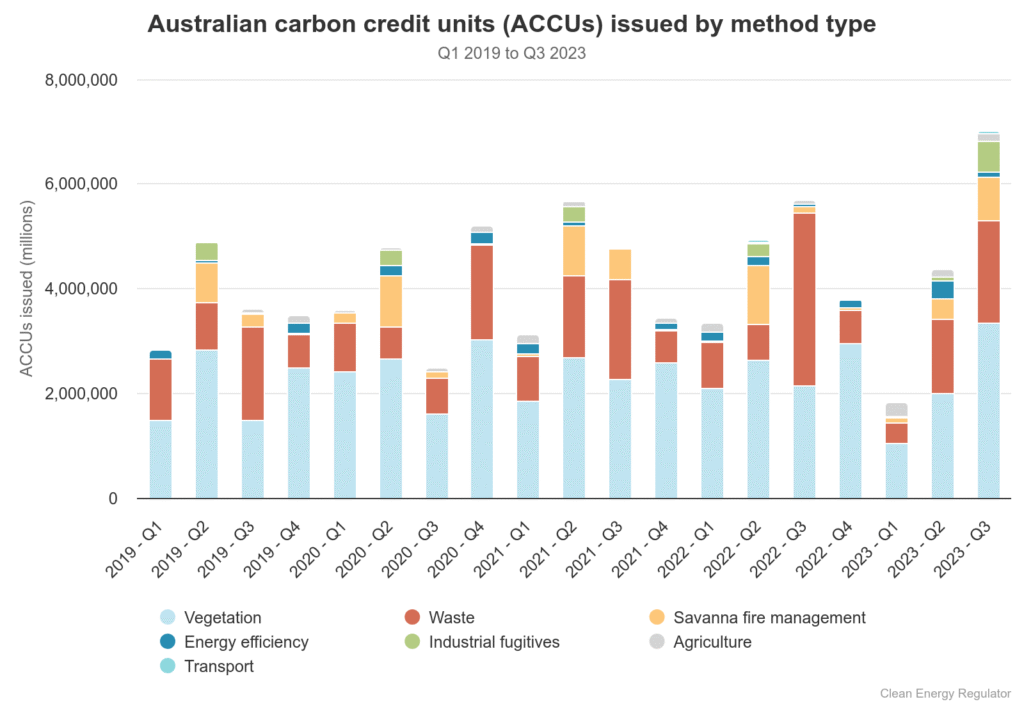
Source: Clean Energy Regulator
Type of ACCUs methods
There are a range of ACCU methods covering agriculture, carbon capture and storage, energy efficiency, natural resources , transport, vegetation and waste management.
ACCU sequestration methods are some of the most in-demand and set out vegetation and soil-based activities which prevent or reverse the release of carbon to the atmosphere by storing it in the plants, debris and soil. The following are examples of sequestration activities involving forest protection, plant and soil improvement and planting are detailed in the methods:
- Regrowth and regeneration of native vegetation allows the cleared land to revert to native forest which stores additional carbon in the plants. One of the key methods in this category was the Human-Induced Regeneration (HIR) method, which has now been sunsetted. A new method—Integrated Farm and Land Management (IFLM)—remains under consideration by the Department.
- Store carbon in soil on your grazing land by increasing carbon inputs to, or losses from, the soil.
- Protect, maintain or restore native vegetation on your land preventing the loss of stored carbon and permitting additional storage of carbon in the existing plants (several methods currently under development).
- Planting native vegetation on your land establishes a permanent forest which stores additional carbon in the new plantings.
- Savanna fire management projects use “cool” burns to reduce fuel loads during cooler weather to avoid much larger, more destructive wildfires in the hotter seasons.
ACCU Pricing
ACCU prices vary based on methodology and other factors such Indigenous co-benefits. The chart below shows the performance of generic ACCU over the past couple of years.
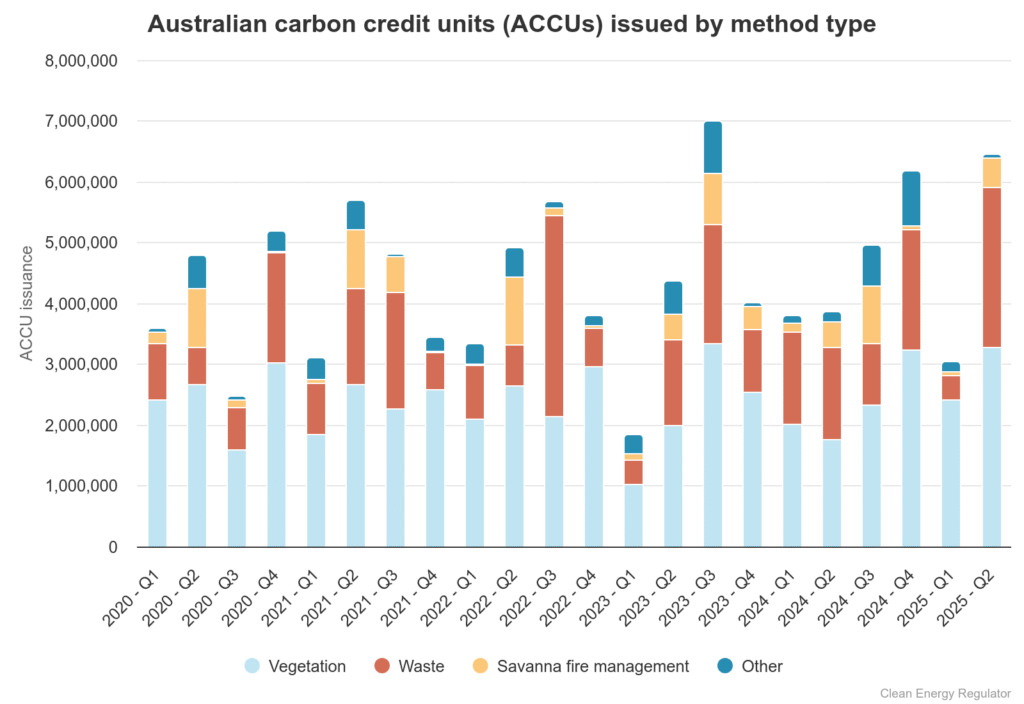
Source: Clean Energy Regulator