Carbon Farming Guide
Carbon farming is a whole-of-farm or landscape scale approach to land management, which aims to implement activities that increase the carbon sequestration rates in soils and vegetation.

Carbon farming is a whole-of-farm or landscape scale approach to land management, which aims to implement activities that increase the carbon sequestration rates in soils and vegetation.

Carbon Credit is a transferable instrument certified by governments or independent certification bodies to represent an emission reduction of one metric tonne of CO2e. The purchaser of an offset credit can “retire” it to claim the underlying reduction towards their own GHG reduction goals.
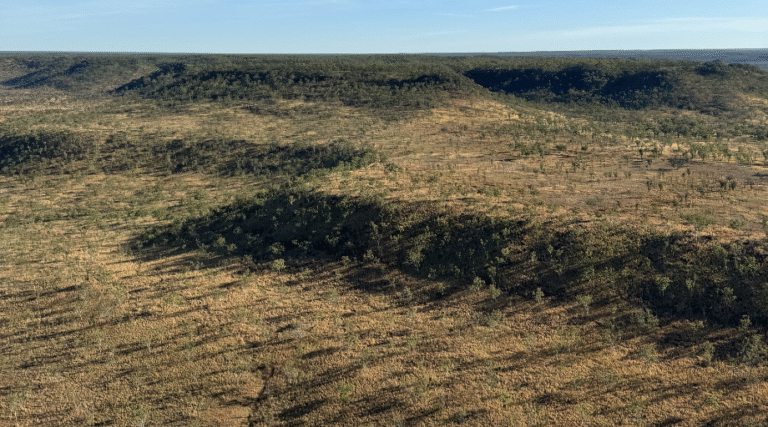
An Australian Carbon Credit Unit (ACCU) is issued by the Clean Energy Regulator (Regulator) and represents one tonne of carbon dioxide equivalent (tCO2-e) not released into the atmosphere as a result of the activity undertaken by a carbon project. ACCUs are tradeable financial products that can be sold to the Australian Government or to businesses wishing to offset their emissions. There are more than 2,000 ACCU projects registered across Australia.

At the end of 2023, Verra, the leading international standards body for voluntary carbon markets, released a materially revised REDD+ methodology. While REDD was originally designed to reduce emissions from deforestation and forest degradation, the update significantly strengthened credit integrity and accounting by shifting to jurisdictional baselines, tightening additionality and leakage treatment, and aligning project

Blue carbon is the term used to describe carbon that is stored by our oceans and coastal ecosystems in algae, seagrasses, macroalgae, mangroves, salt marshes and other plants in coastal wetlands.

Article 6 of the Paris Agreement provides a high-level approach to creating global carbon markets, envisioning three main approaches: cooperation between parties to the Paris Agreement; the establishment of a centralised mechanism to support sustainable development, where credits could be traded, with participation from both public and private sectors; and “non market” approaches.