The Waterhouse River Carbon Project presents a unique opportunity to invest in a registered Human-Induced Regeneration (HIR) project alongside a sustainable cattle grazing operation on the edge of Arnhem Land in the Northern Territory.
The 139,200 ha aggregation has approximately 4,500 head of cattle and has a history of vegetation suppression due to overgrazing and feral animal impacts. The project will see Viridios Capital deliver the requirements of the HIR methodology alongside a sustainable cattle grazing operation, with humane management of feral buffalo and donkeys.
Project Location
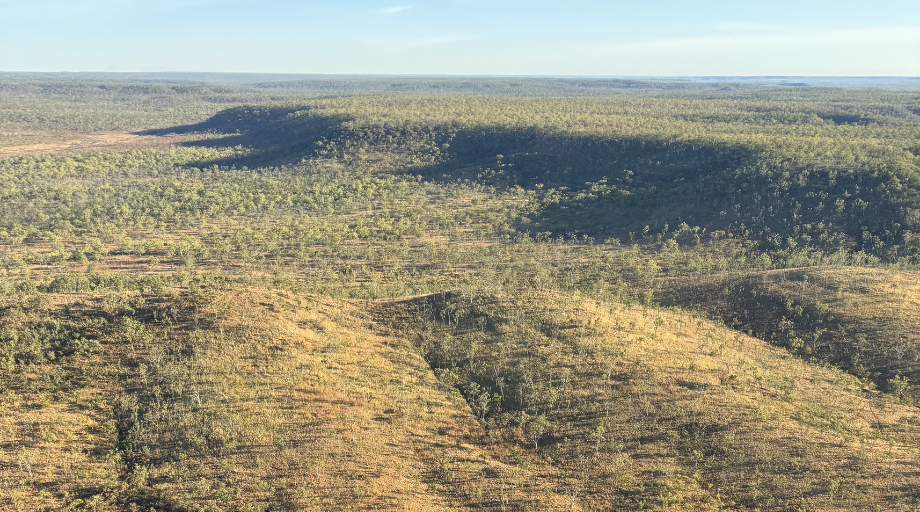
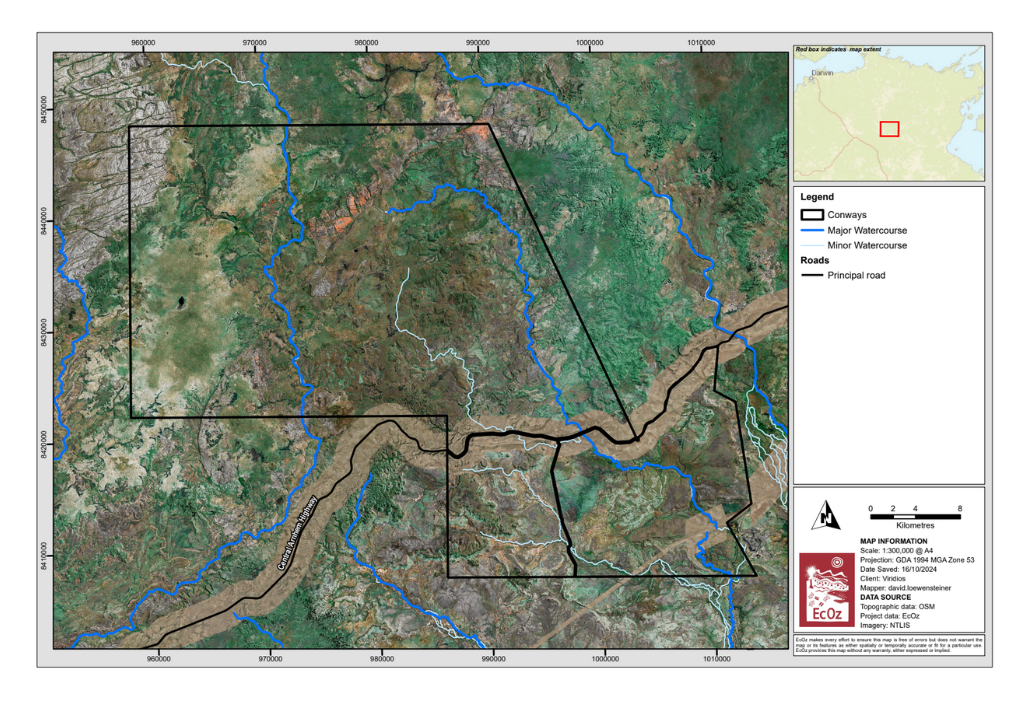
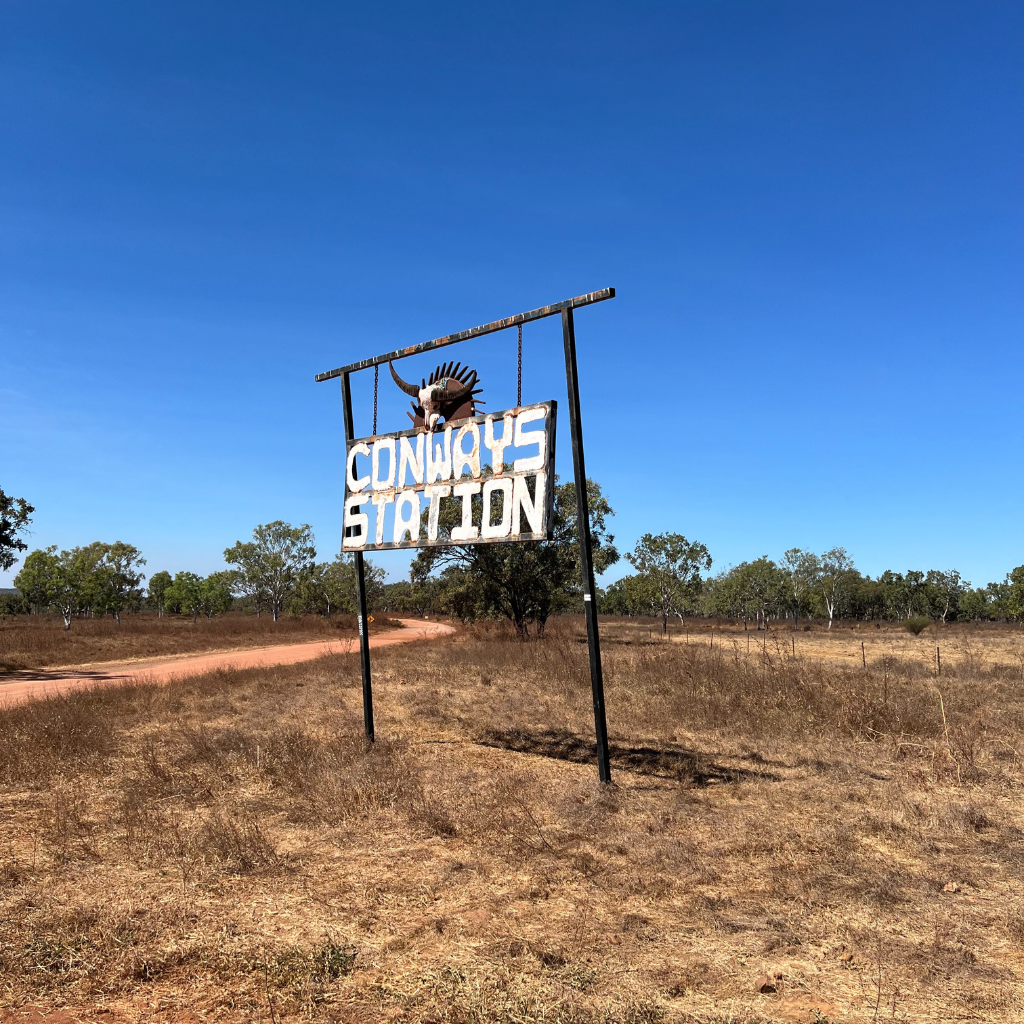
Conways Station, the site of the Waterhouse River Carbon Project, is a 139,200-hectare cattle property located in the Roper region of the Northern Territory, approximately 170 kilometres east of Katherine. The station lies within a landscape of tropical savannas and riverine woodlands, an area critical for biodiversity and land-based carbon sequestration.
The project operates on pastoral land, integrating carbon farming with traditional grazing practices to enhance soil health, restore native vegetation, and reduce emissions across this remote northern landscape.
The map provided by ECoZ illustrates the boundaries of Conways Station along with its watercourses.
ACCU Generation
The preliminary ACCU forecast for the HIR project is estimated at 1.4 million ACCUs over the 25 year crediting period. The project permanence is 25 years.
Viridios Capital is managing the cattle operation and implementation of the carbon project. This may include additional carbon opportunities under the future Integrated Farm and Land Management method.
Project Number: ERF 187498
Mozambique Blue Carbon Project
Sofala and Zambezia provinces, Mozambique
Located along Mozambique’s Sofala and Zambezia coastlines, the MozBlue Project is restoring and protecting 140,000 hectares of mangroves to strengthen coastal resilience, support biodiversity, and create sustainable livelihoods through community-led blue carbon initiatives.
Carbonwave transforms the environmental threat of invasive Sargassum seaweed into opportunity by harvesting it before decay and converting it into sustainable materials, helping restore ocean health, reduce methane emissions, and support coastal communities across the Caribbean.
Lumagra (formerly NIHT Topaiyo) is Papua New Guinea’s only active REDD+ project operating outside the national moratorium. Spanning 1.6 million hectares across New Ireland and East New Britain, the project is transitioning to Viridios Capital’s management and aims to issue VCUs by Q4 2026. Through partnerships with Landholder Groups and community organisations, Lumagra protects critical forest ecosystems while delivering long-term environmental, social, and economic benefits to local communities.